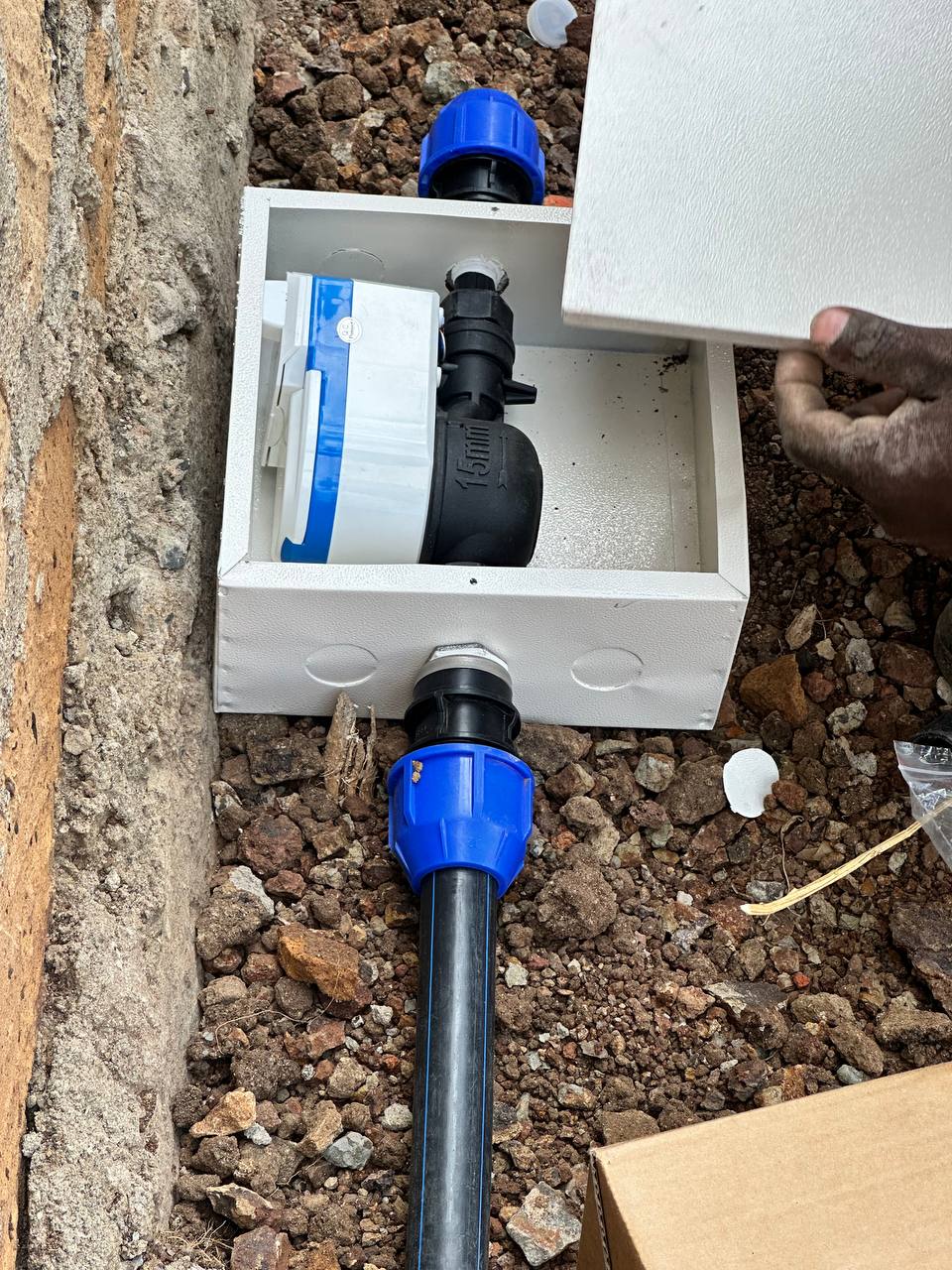
Prepaid water meter token failures in Kenya can cause frustration for tenants, landlords, property managers and water suppliers. A customer may complete an M-Pesa payment successfully but fail to receive a token. Sometimes the token arrives but the water meter rejects it. In other cases, the credit is loaded successfully, yet water does not flow.
These problems highlight an important lesson: a reliable prepaid water metering system requires more than a good water meter. It needs dependable payment processing, secure token generation, accurate customer records and effective technical support.
For apartment owners, borehole operators, institutions and community water projects, reliability is just as important as the ability to collect payments in advance.
This article explains nine ways to prevent prepaid water meter token failures, improve customer service and protect water revenue.
1. Understand How Prepaid Water Meter Tokens Work
A prepaid water meter allows consumers to purchase water credit before consumption.
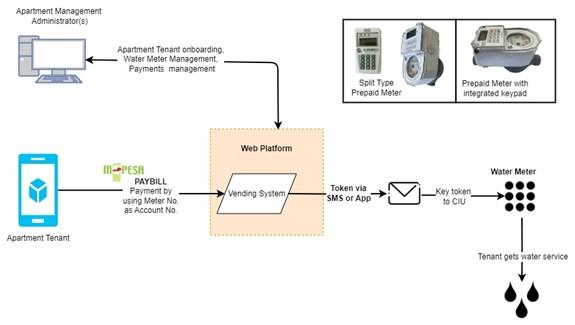
In a typical STS prepaid water metering arrangement:
- The customer purchases water credit through M-Pesa or another supported payment channel.
- The payment system confirms the transaction.
- The vending platform generates a secure prepaid token.
- The customer receives the token.
- The customer enters the token through the water meter’s keypad or Customer Interface Unit (CIU).
- The meter validates the token and updates the available credit.
- Water consumption is deducted from the prepaid balance.
STS stands for Standard Transfer Specification, an internationally used secure token-transfer standard.
According to the STS Association, STS payment meters can receive credit and management tokens. The standard supports prepaid water measurement in cubic metres as well as currency-based arrangements.
The system therefore depends on several components working correctly.
A failure at any stage can interrupt the customer’s ability to recharge their meter.
Learn more about Dotmobi STS Prepaid Water Meters in Kenya.
2. Prevent M-Pesa Payment Confirmation Failures
M-Pesa integration makes purchasing prepaid water credit convenient for Kenyan customers.
However, successful payment and successful token generation are two separate processes.
For example, a customer might send KSh 500 through M-Pesa. The payment is successful, but the vending platform does not immediately receive or process the confirmation.
The customer may then assume that the money has disappeared.
A properly designed vending system should:
- Record the unique payment transaction reference.
- Verify payment status before issuing credit.
- Prevent duplicate credit issuance for the same transaction.
- Record successful and unsuccessful token-generation attempts.
- Allow authorised reconciliation of unresolved payments.
- Provide an appropriate customer support process.
Important: Customers should not automatically make a second payment simply because a token is delayed.
They should first check their M-Pesa confirmation and contact the relevant vending-system operator.
Maintaining dependable transaction records is essential for prepaid water meter reliability.
3. Verify the Correct Water Meter Number
One common cause of prepaid token problems is an incorrect meter number.
In a multi-storey apartment building, a landlord may manage dozens of water meters.
If the wrong meter number is associated with a tenant’s account, a valid token may be generated for another meter.
The intended meter will then reject it.
The STS system uses meter-related identification and security information when producing and validating tokens.
To prevent incorrect meter allocation, property managers should maintain an accurate register containing:
- Property and apartment number.
- Water meter serial number.
- Customer account reference.
- Current tenant or authorised user.
- Meter installation location.
- Commissioning information.
- Meter replacement history.
For larger properties, this register should be maintained electronically.
Dotmobi also recommends proper planning before installation. Read our article on prepaid water meters for apartments in Kenya.
4. Understand Why a Prepaid Water Meter Rejects Tokens
A prepaid water meter may reject a token for several reasons.
These include:
Incorrect token entry: One or more digits may have been entered incorrectly.
Wrong meter number: The token may have been generated for a different meter.
Previously used token: A token already accepted by the meter may not be accepted again as new credit.
Security configuration mismatch: Depending on the STS implementation, differences in security parameters such as supply-group or key-revision information can cause token rejection.
Token sequencing or configuration problems: Some systems require particular management tokens to be loaded in the correct order.
The STS Association explains the secure token and key-management principles behind STS systems.
Customers should never attempt unauthorised meter reprogramming to overcome a rejected token.
Instead, they should report the meter number, token reference, purchase details and any error displayed by the meter to the service provider.
5. Check the Customer Interface Unit and Meter Communication
A Customer Interface Unit, or CIU, allows a customer to enter prepaid credit and access supported meter information.
Some water meters have an integrated keypad.
Others use a separate wireless CIU that communicates with the installed meter.
If the wireless communication fails, the customer may be unable to load a token even though the purchase was successful.
Possible causes include:
- A discharged CIU battery.
- Poor wireless communication.
- Excessive distance between the CIU and the meter.
- Building structures interfering with communication.
- Incorrect device pairing.
- A defective or damaged interface.
The correct troubleshooting procedure depends on the manufacturer’s design.
Before purchasing a water meter, landlords should evaluate the installation location and the type of customer interface required.
Our comparison explains the difference between wireless CIU and integrated keypad prepaid water meters.
6. Prepare for Internet and Vending-System Interruptions
Prepaid water meter installations often depend on several external systems, including mobile money, internet connectivity, application servers and database services.
A temporary interruption may affect the ability to purchase new credit.
However, a vending-system interruption does not necessarily mean that a meter with existing valid credit must stop supplying water.
In a typical locally credited STS meter, accepted credit is stored and managed by the meter. The precise behaviour depends on the product configuration.
Water suppliers should therefore distinguish between:
- Failure to purchase new credit.
- Failure to deliver a generated token.
- Failure to load a token.
- Loss of communication with a monitoring platform.
- Exhaustion of existing prepaid credit.
A reliable prepaid water system should have an incident-response procedure that identifies the affected component.
Operators should also consider payment reconciliation, database backups, service monitoring and authorised recovery procedures.
These measures can help reduce service interruptions and customer complaints.
7. Protect the Prepaid Water Vending Platform
Security is essential because prepaid water vending systems process financial transactions and control the allocation of water credit.
Weak security can expose the system to unauthorised access, data modification, fraudulent credit issuance or prolonged outages.
Recommended safeguards include:
- Storing database credentials securely instead of embedding passwords directly in application code.
- Restricting database permissions according to user responsibilities.
- Using encrypted connections where supported.
- Keeping detailed audit logs of credit issuance and reversals.
- Separating development, testing and production access.
- Maintaining tested database backups.
- Protecting secure token-generation keys.
- Controlling administrative changes to tariffs and meter records.
- Monitoring unusual transactions and system failures.
The importance of secure token generation is explained by the STS Association.
A water-metering platform should protect both the customer’s payment and the water supplier’s revenue.
8. Provide Reliable Customer Support and Complaint Resolution
Technical problems become more serious when customers cannot obtain timely assistance.
Consider a tenant who pays for water late in the evening but receives no token.
The immediate concern is not the technology behind the failure. It is whether the tenant will be able to access water.
A dependable prepaid water service should provide a clear support process.
Customers should know:
- Where to report a failed token purchase.
- What payment details to provide.
- How unresolved transactions are investigated.
- Who is responsible for meter maintenance.
- How service interruptions are escalated.
- How confirmed payment errors are corrected.
Kenya’s Water Services Regulatory Board (WASREB) emphasises consumer engagement, complaints handling and accountability in regulated water services.
A 2018 study of communal prepaid water metering in Nakuru, Kenya, also found improvements in several aspects of water service delivery following prepaid-meter deployment. The researchers nevertheless emphasised the importance of affordability, customer confidence and effective water-service management.
Read the research: Do prepaid water meters improve the quality of water service delivery? The case of Nakuru, Kenya.
Prepaid water metering should improve customer confidence rather than simply replace one billing system with another.
9. Test the Complete System Before Installation Is Handed Over
Installing a prepaid water meter should involve more than connecting it to a pipe.
The complete payment and metering process should be tested before the customer begins using it.
A practical commissioning exercise should verify:
- Correct meter identification and customer registration.
- Initial meter activation according to the manufacturer’s instructions.
- Successful test payment and payment confirmation.
- Secure token generation.
- Token delivery to the intended customer.
- Successful token loading.
- Correct updating of available credit.
- Appropriate meter response to water consumption.
- Correct operation of the meter valve.
- Reporting of transactions and errors.
Where applicable, the installer should also demonstrate how customers check their remaining water credit and consumption.
For systems connected to a central bulk meter, commissioning should additionally consider the ability to compare overall water supply with individual consumption.
Read our article on bulk water meter integration with prepaid water meters.
Why Dotmobi STS Prepaid Water Meters Matter
Dotmobi provides STS prepaid water metering solutions for Kenyan residential, commercial and institutional applications.
The solutions are suited to:
- Rental apartments and residential estates.
- Gated communities.
- Schools and student hostels.
- Commercial premises.
- Borehole water projects.
- Community water schemes.
- Factories and institutions.
Dotmobi’s prepaid water-management offering brings together water measurement, secure token-based credit loading and supported mobile-payment integration.
Depending on project requirements, customers can choose suitable meter and keypad configurations.
For property owners seeking broader control over water usage, prepaid metering can also be combined with bulk-meter monitoring and water-loss investigation.
See our related guide on prepaid water meter leak detection.
Frequently Asked Questions About Prepaid Water Meter Token Failures
Why is my prepaid water meter rejecting a token?
A token may be rejected because it was entered incorrectly, has already been used, was generated for another meter or does not match the meter’s security configuration. Contact your service provider if the problem persists.
What should I do if M-Pesa payment succeeds but no water token arrives?
Keep your M-Pesa confirmation message and contact the authorised vending operator. Request verification of the payment and token-generation status before making another payment.
Can a prepaid water meter work without internet?
Many STS token-based water meters can use credit already loaded into the meter without continuous internet access. However, purchasing new tokens or accessing remote monitoring may require connectivity, depending on the system design.
What happens when prepaid water credit runs out?
For prepaid water meters equipped with an automatic control valve, water supply may stop when the available credit reaches the configured limit. The exact response depends on the meter configuration.
Can a token purchased for one water meter be used on another meter?
Normally, no. STS credit tokens are associated with the intended meter and relevant security parameters. An incorrectly allocated token requires investigation by the vending-system operator.
How can landlords reduce prepaid water meter failures?
They should select suitable meters, ensure proper installation, maintain accurate meter records, test payment and token issuance, provide user training and establish reliable support procedures.
Does a prepaid water meter automatically detect leaks?
Not necessarily. Leak detection depends on the capabilities of the meter and monitoring system. Detailed consumption data may help identify unusual usage patterns that require investigation.
Conclusion: Reliable Prepaid Water Metering Builds Customer Confidence
Prepaid water meter token failures in Kenya can affect revenue collection, customer satisfaction and confidence in water services.
The solution is not simply to purchase another meter.
Reliable prepaid water management requires secure token vending, accurate customer records, dependable payment processing, proper installation, system monitoring and responsive technical support.
For landlords, institutions and community water projects, these considerations should be part of the purchasing decision from the beginning.
Looking for reliable STS prepaid water meters in Kenya?
Dotmobi can assist with product selection, project planning, installation requirements and prepaid water-management solutions.
Contact Dotmobi LLP
Phone: +254 722 761 322
Email: info@dotmobi.co.ke
Website: https://dotmobi.co.ke/
Product information: https://dotmobi.co.ke/product/sts-prepaid-water-meter/
Make water payments more accountable. Make water consumption easier to manage.