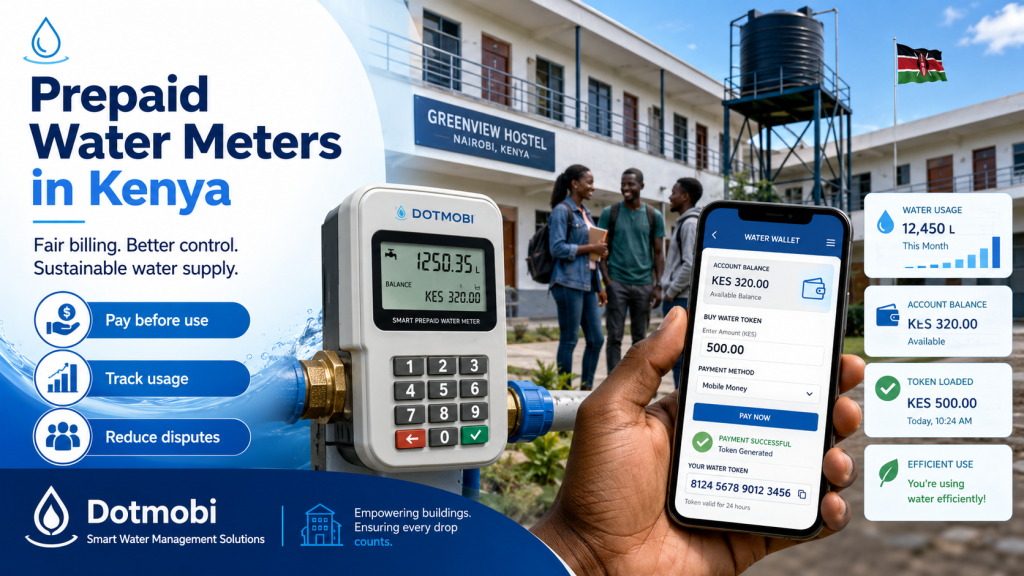
On Monday morning, the water tank serving a busy student hostel was full.
By Wednesday afternoon, it was empty.
The caretaker checked the pipes. There was no major leakage. The pump was functioning, and the borehole had supplied the expected amount of water.
The landlord called a meeting.
Some tenants blamed the students who washed clothes every day. Others blamed the ground-floor residents for leaving taps running. A few insisted that the caretaker was selling water to neighbouring properties.
Nobody had evidence.
Every tenant paid the same monthly water charge, regardless of how much water they consumed. One room could use five buckets a day while another used twenty, yet everyone received an equal bill.
When the tank ran dry, the landlord had to purchase water from a tanker. The additional cost was divided among all tenants, creating even more complaints.
The hostel did not simply have a water shortage.
It had a water-accountability problem.
When Shared Water Billing Becomes Unfair
Shared water bills may appear simple when a property has only a few tenants.
However, as the number of users grows, the arrangement can quickly become difficult to manage.
Some residents conserve water carefully. Others leave taps running, wash vehicles frequently, operate small businesses from their rooms or allow visitors to use large amounts of water.
At the end of the month, everyone is asked to contribute an equal amount.
The careful user subsidises the careless user.
The landlord spends time explaining bills, following up payments and responding to complaints. The caretaker is placed in the middle of disputes that cannot be resolved using reliable consumption records.
This is why more landlords, property managers, institutions and water suppliers are considering prepaid water meters in Kenya.
A prepaid water meter makes water consumption measurable, individual and easier to manage.
What Is a Prepaid Water Meter?
A prepaid water meter measures the volume of water used while deducting the cost from credit purchased in advance.
The system follows a model that many Kenyan consumers already understand through prepaid electricity.
The user purchases water credit before consumption. A secure token is generated and loaded into the meter through the supported meter interface or Customer Interface Unit. As water is consumed, the corresponding value is deducted from the available balance.
When the credit is exhausted, the meter’s internal valve can restrict further consumption until the user purchases additional credit.
Dotmobi STS prepaid water meters are designed to support structured, token-based water management for landlords, institutions, water projects and commercial users.
How Dotmobi Prepaid Water Metering Works
The Dotmobi prepaid water management process is straightforward:
- The customer purchases water credit.
- Payment is made through the supported M-Pesa vending platform.
- The platform confirms the payment.
- A secure prepaid water token is generated.
- The customer enters the token through the Customer Interface Unit or supported meter interface.
- The purchased water credit is loaded.
- The meter measures consumption and deducts it from the remaining balance.
This gives consumers greater control over their expenditure while helping the water provider collect revenue before consumption.
Why Prepaid Water Meters Are Important for Landlords
1. Tenants Pay for Their Actual Consumption
A prepaid water meter helps separate water charges according to individual consumption.
A tenant who uses less water pays less. A tenant who consumes more purchases additional credit.
This is fairer than dividing one shared bill equally among residents whose consumption patterns are different.
2. Reduced Water-Billing Disputes
Many landlord-tenant disagreements begin with simple questions:
- Why is my water bill so high?
- Why should I pay the same amount as a larger family?
- How was my bill calculated?
- Why am I being charged when I was away?
- Why should I contribute to another tenant’s unpaid balance?
When consumption is individually metered, these questions become easier to answer.
The meter records usage, and the consumer buys credit according to personal requirements.
3. Fewer Unpaid Water Bills
Postpaid billing allows consumers to use water first and pay later.
When a tenant delays payment, the landlord may still have to pay the borehole electricity bill, water-company bill, pump-maintenance expenses or tanker supplier.
With prepaid water metering, payment is received before water is consumed.
This helps property owners reduce arrears and improve cash flow.
4. Less Time Spent Following Up Payments
Landlords and caretakers should not have to spend every month moving from door to door collecting water payments.
Prepaid meters allow users to purchase water credit when required.
This reduces the administrative burden of preparing bills, collecting cash, recording payments and pursuing defaulters.
5. Better Control of Water Consumption
People tend to use a resource more carefully when they can see how their own behaviour affects the remaining balance.
A dripping tap is repaired sooner.
A tap is not left running unnecessarily.
Residents become more conscious of how much water they use when washing clothes, cleaning houses or watering plants.
Prepaid metering therefore supports both financial discipline and responsible water consumption.
How Prepaid Water Meters Help Tenants
Prepaid water meters are not only beneficial to landlords.
They can also protect tenants from unfair and unexplained charges.
A tenant gains:
- Control over personal water spending
- A clearer connection between payment and consumption
- Freedom from another tenant’s unpaid water balance
- Reduced exposure to estimated bills
- An opportunity to budget for water
- Greater confidence in how charges are calculated
Instead of receiving an unexpected shared bill at the end of the month, the tenant can purchase water credit according to household needs and available funds.
Back to the Hostel That Ran Out of Water
The landlord eventually installed individual prepaid water meters for the hostel rooms.
The change was immediate.
The student who washed clothes daily purchased more credit.
The tenant who travelled home for two weeks spent almost nothing during that period.
The caretaker stopped collecting equal monthly water contributions.
The landlord no longer had to decide who was responsible whenever the tank emptied faster than expected.
More importantly, water consumption reduced.
Once every tenant became responsible for personal usage, taps were closed properly, leaks were reported quickly and unnecessary wastage declined.
The hostel did not discover a new source of water.
It started managing the available water better.
Prepaid Water Meters for Community Water Projects
Community boreholes and water projects often face a different version of the same problem.
Residents depend on the project for water, but revenue collection may be irregular. Some consumers take water on credit, while others delay payment for weeks or months.
Meanwhile, the project must still meet expenses such as:
- Electricity for pumping
- Pump servicing and replacement
- Plumbing repairs
- Security
- Operator wages
- Water-treatment costs
- Storage-tank maintenance
- System expansion
A water project may have a productive borehole but still fail because it does not collect enough revenue to maintain the infrastructure.
Prepaid water meters help the project collect payment before supplying water. The money collected can support maintenance and improve the sustainability of the scheme.
Where Dotmobi Prepaid Water Meters Can Be Used
Dotmobi prepaid water meters are suitable for many environments, including:
- Apartments and rental houses
- Bedsitters and hostels
- Gated communities
- Borehole water projects
- Schools and colleges
- Hospitals
- Factories and staff housing
- Commercial buildings
- Churches and institutions
- Water-vending points
- Community water schemes
- Farms and irrigation projects
The common requirement is simple: water must be measured, controlled and paid for fairly.
What Does STS Mean in Prepaid Water Metering?
STS refers to the Standard Transfer Specification used in secure prepaid utility-token systems.
An STS-based prepaid meter accepts a secure token representing purchased credit. The consumer enters the token through the supported interface, and the meter validates it before adding the purchased units.
This structured token system makes prepaid water metering suitable for organised residential, institutional and commercial applications.
Why M-Pesa Integration Matters in Kenya
A prepaid meter is most useful when customers can purchase credit conveniently.
Dotmobi has developed a local prepaid-water management platform through which customers can pay using M-Pesa. After confirmation of payment, the system generates the appropriate water token for loading through the Customer Interface Unit or supported meter interface.
This makes the system practical for Kenyan users who already rely on mobile money for rent, electricity, shopping and other daily transactions.
The consumer does not have to wait for a caretaker to visit the property or manually update a paper record.
Payment and token issuance can be handled through a more structured digital process.
Prepaid Water Metering Is About More Than Collecting Money
The greatest value of prepaid water metering is not simply that it helps landlords collect payments.
It creates accountability.
Consumers understand that every litre has a cost.
Property managers gain clearer control over revenue.
Community projects can plan maintenance using funds collected before consumption.
Institutions can identify where water is being used and encourage responsible behaviour.
When water is properly measured, it becomes easier to manage.
Frequently Asked Questions About Prepaid Water Meters in Kenya
Can prepaid water meters be used in rental apartments?
Yes. Prepaid water meters are suitable for apartments, bedsitters, rental houses, hostels and gated communities. Each unit can purchase water credit according to its own consumption.
Can customers buy water credit through M-Pesa?
Dotmobi supports a prepaid water management platform through which customers can pay using M-Pesa and receive a secure water token for loading into the meter.
What happens when the water credit is finished?
When the available credit is exhausted, the meter’s internal valve can restrict the water supply until additional credit is purchased and loaded.
Are prepaid water meters suitable for boreholes?
Yes. They can be used by private borehole operators, community water projects, schools, farms, estates and other organisations supplying water from boreholes.
Do prepaid meters help reduce water wastage?
They can encourage responsible usage because each consumer pays according to the volume consumed. Users are more likely to repair leaks and avoid unnecessary consumption when it directly affects their balance.
Can prepaid water meters reduce disputes between landlords and tenants?
Yes. Individual measurement makes billing more transparent and reduces disagreements arising from estimated or equally divided water charges.
Choose Better Water Accountability
Water shortages are not always caused by a lack of water.
Sometimes, the real problem is uncontrolled consumption, poor revenue collection or an unfair billing system.
The hostel tank in our story was empty by Wednesday because nobody was individually accountable for the water being used.
Prepaid water metering changed that.
Each tenant paid for actual consumption. The landlord stopped chasing shared bills. The caretaker stopped defending figures written in a notebook. Water lasted longer because users became more responsible.
That is what a good water-metering system should achieve:
Fair payment.
Measured consumption.
Improved revenue collection.
Better water management.
Learn more about Dotmobi STS Prepaid Water Meters in Kenya.
Explore Dotmobi products and smart technology solutions.
For enquiries, installation guidance or a quotation, contact Dotmobi LLP.
Telephone: +254 722 761 322
Email: info@dotmobi.co.ke