
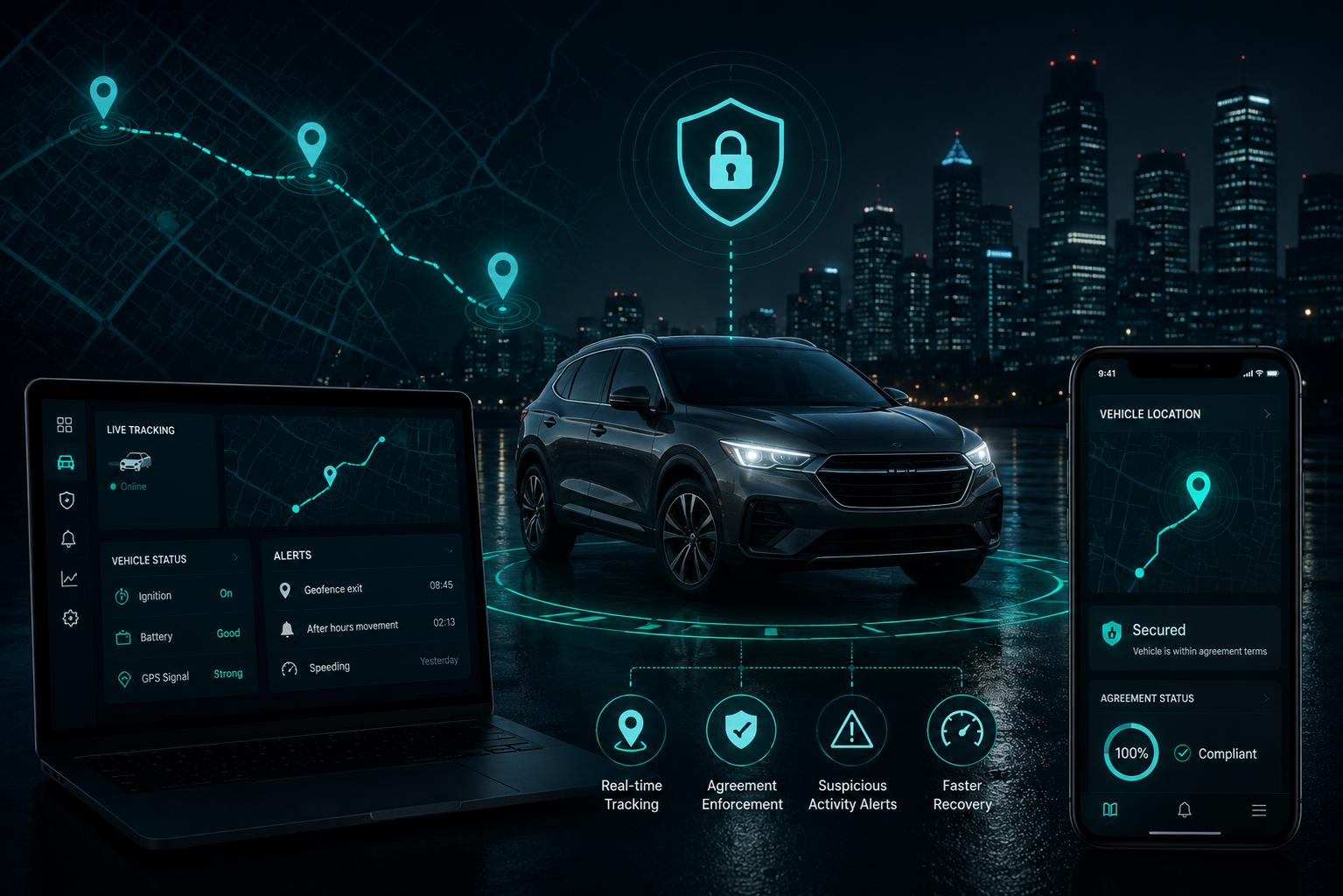
Car tracking in Kenya has become an important consideration for vehicle owners as organised criminal networks increasingly target cars, commercial vehicles and transport businesses.
Recent investigations by the Directorate of Criminal Investigations (DCI) have demonstrated how stolen vehicles can cross international borders, undergo identity changes and enter unsuspecting markets.
In October 2026, Kenya participated in Operation Carback II, an international operation targeting organised motor vehicle theft.
The findings provide valuable lessons for private motorists, car hire operators, logistics companies and fleet managers.
For anyone considering car tracking in Kenya, the central question is no longer simply whether a GPS tracker can display a vehicle’s location. It is whether the chosen security system can provide timely information when suspicious activity occurs.
This article examines seven powerful lessons from Operation Carback II and explains how GPS vehicle tracking can contribute to improved security.
Operation Carback II: What Happened in Kenya?
On 17 October 2026, the DCI reported the outcome of Operation Carback II, a coordinated law enforcement operation targeting local and international vehicle theft syndicates.
The operation involved Kenya’s INTERPOL National Central Bureau, the DCI and several other government agencies.
According to the official report:
- More than 1,800 vehicles were physically inspected.
- Over 260,000 vehicle records were checked against the INTERPOL database.
- Investigations covered several regions of Kenya.
- A Land Rover Discovery reported stolen in the United Kingdom was recovered from a vehicle yard along Nairobi’s Northern Bypass.
Investigators also identified suspicious vehicle registration discrepancies during the operation.
These findings illustrate how motor vehicle crime can involve international networks, altered identities and fraudulent vehicle documentation.
Official research: Directorate of Criminal Investigations – Operation Carback II
The case demonstrates why car tracking in Kenya should be considered alongside vehicle identification, secure parking and prompt reporting of suspicious activity.
Why Car Tracking in Kenya Is Important for Vehicle Security
Motor vehicle theft is not limited to Nairobi or other major towns. Vehicles can be stolen, relocated and potentially moved across national borders.
In a report published on 8 May 2025, the DCI described an increase in motor vehicle theft since the beginning of 2024.
Its investigations resulted in:
- The arrest of 28 suspects.
- The recovery of 22 stolen vehicles.
- Identification of criminal activity involving vehicles sold within Kenya or transported towards neighbouring countries, including Uganda and Tanzania.
The DCI recommended installing anti-theft devices, using secure parking locations and exercising greater vigilance.
Official research: DCI – Crackdown on Motor Vehicle Theft
These findings reinforce the value of GPS car tracking systems that can help vehicle owners monitor movement and investigate unexpected activity.
However, GPS technology alone cannot guarantee that a stolen vehicle will be recovered.
7 Powerful Lessons for Car Tracking in Kenya
Lesson 1: Real-Time GPS Tracking Improves Vehicle Visibility
A GPS tracking system uses satellite navigation signals to determine a vehicle’s position.
Depending on the installed equipment, location updates can be transmitted through a mobile communication network to an online monitoring platform.
Vehicle owners and authorised fleet managers can view information such as:
- Current or last reported vehicle location.
- Recent vehicle movements.
- Travel routes.
- Vehicle operating status, where supported.
During a suspected theft, recent location information may assist investigators in identifying a vehicle’s last known movements.
For effective car tracking in Kenya, owners should consider equipment reliability, communication coverage and how frequently the system reports vehicle positions.
Lesson 2: Geofencing Can Help Detect Unauthorised Movements
Geofencing allows users to create virtual geographical boundaries around selected locations.
For example, a transport company operating between Nairobi, Nakuru and Eldoret may define authorised operating areas.
If a vehicle leaves or enters a designated area, a properly configured tracking system can generate a notification.
This capability may help identify:
- Unauthorised vehicle movements.
- Unexpected departures from parking locations.
- Vehicles operating outside approved areas.
- Unusual changes in transport routes.
Geofencing is particularly useful for fleet managers who need greater visibility over multiple vehicles.
Lesson 3: Ignition and Movement Alerts Support Earlier Detection
Some GPS vehicle tracking devices can monitor ignition status and detect vehicle movement.
Consider a company vehicle expected to remain parked overnight.
If the vehicle starts moving unexpectedly, a tracking system equipped with the appropriate sensors and alert settings may notify its authorised users.
Such notifications can provide an opportunity to investigate suspicious activity sooner.
For commercial users, this makes car tracking in Kenya useful not only for theft-related incidents but also for identifying unauthorised vehicle use.
Lesson 4: GPS Tracking Systems Can Be Vulnerable to Signal Jamming
Modern vehicle tracking systems face technological challenges.
One concern is radiofrequency jamming, which can interfere with satellite navigation signals or mobile network communications.
On 10 April 2026, the United Kingdom government announced a consultation concerning misuse of signal-jamming devices, including their use in vehicle-related crime.
Research: UK Government – Signal Jamming Devices and Vehicle Theft
A separate incident reported by Tracker Network UK on 27 May 2026 demonstrated this vulnerability.
According to the company, criminals used four GPS jamming devices while transporting a stolen Toyota RAV4.
The vehicle was nevertheless recovered with police assistance because its installed system included additional VHF-based tracking capabilities.
Research: Tracker Network UK – Toyota RAV4 Recovery Despite GPS Jamming
This case does not establish the prevalence of jamming in Kenya.
It does, however, show why vehicle owners should understand the limitations of GPS-only tracking equipment.
Lesson 5: Backup Power and Tamper Alerts Improve Security Awareness
A GPS tracking device normally requires electrical power to operate.
If a tracking device is disconnected from the vehicle’s battery, some equipment may stop reporting.
Devices with backup batteries may continue operating for a limited period, depending on battery capacity and system configuration.
Other potentially useful capabilities include:
- Main power disconnection notifications.
- Device tamper alerts.
- Low-battery warnings.
- Tracker offline notifications.
- Communication interruption records.
These capabilities should be evaluated when choosing a solution for car tracking in Kenya.
Vehicle owners should confirm which features are included in the selected device and monitoring package.
Lesson 6: Historical Tracking Records Support Investigations
GPS tracking platforms can maintain records of vehicle movements.
These records may include timestamps, locations, routes and stopping points.
For example, if a company vehicle disappears from an authorised parking area, its historical tracking information may help establish when it last moved and where it was subsequently reported.
Such records can also support investigations into:
- Unauthorised journeys.
- Unusual stops.
- Route deviations.
- Disputes over vehicle use.
- Operational inconsistencies.
Historical records should be protected against unauthorised access and retained in accordance with the organisation’s legitimate operational and privacy requirements.
GPS records are supporting information, not a replacement for official investigations.
Lesson 7: Vehicle Tracking Works Best with Multiple Security Measures
One of the most important lessons from Operation Carback II is that vehicle security requires more than one protective measure.
A comprehensive approach may combine:
- GPS vehicle tracking.
- Secure vehicle parking.
- Physical anti-theft equipment.
- Geofencing and movement alerts.
- Backup power and tamper monitoring.
- Verification of vehicle ownership and registration documents.
- Prompt reporting and cooperation with law enforcement.
Car tracking in Kenya can strengthen this approach by providing vehicle visibility, but it cannot eliminate every security risk.
Vehicle owners should choose equipment and procedures based on their circumstances and exposure to theft-related risks.
Car Tracking in Kenya for Commercial Fleet Management
For businesses, vehicle tracking has benefits beyond security.
A fleet manager may need to monitor numerous vehicles operating in different regions.
Without a central monitoring system, understanding daily vehicle activity can become difficult.
A properly configured fleet tracking platform can support several operational functions.
Monitoring Vehicle Movements
Fleet managers can review vehicle locations, authorised journeys and operational routes.
This helps businesses maintain better visibility over vehicle deployment.
Improving Driver Accountability
Historical vehicle records may assist in investigating unauthorised trips, excessive stops and departures from assigned routes.
Where driver identification and related features are supported, businesses can also associate vehicle activity with authorised operators.
Supporting Transport Cost Management
Fleet movement data can help businesses examine journey distances, idling patterns and vehicle utilisation.
This information may identify opportunities for better route planning and operational efficiency.
Improving Fleet Security Procedures
Fleet operators can define internal procedures for handling unexpected vehicle movements, tracker disconnections and suspected theft incidents.
For businesses operating commercial vehicles, car tracking in Kenya can therefore support both asset security and day-to-day transport management.
How to Choose the Best Car Tracking System in Kenya
Before purchasing a vehicle tracking solution, consider the following questions.
Does the system provide reliable location updates?
Confirm the expected reporting frequency and the effect of poor network coverage.
Can the system generate security alerts?
Ask whether the available package supports geofencing, unexpected movement and power-disconnection notifications.
Can you access historical tracking reports?
Determine how long movement records are retained and whether they can be exported when necessary.
Does the device support backup power?
Check whether the tracker includes a backup battery and understand its expected operating limitations.
Is the monitoring platform secure?
Vehicle location records are sensitive information. Access should be restricted to authorised users.
Is technical support available?
A vehicle tracking system requires proper installation, configuration and maintenance.
Can the system support future expansion?
If you operate a fleet, choose a solution that can accommodate additional vehicles and reporting requirements.
The best car tracking in Kenya solution is one that meets the owner’s actual security and operational needs rather than simply offering the longest list of advertised features.
What Operation Carback II Teaches Kenyan Vehicle Owners
The recovery of a vehicle reported stolen in the United Kingdom demonstrates the importance of international cooperation, vehicle identification and effective law enforcement.
However, it also raises an important question for individual vehicle owners.
What information would be available if your vehicle disappeared today?
A properly configured tracking system may provide details of the last reported location and recent movements.
These records can be shared with the appropriate authorities when investigating suspected vehicle theft.
Vehicle owners should immediately report suspected theft to the police and avoid attempting potentially dangerous recoveries themselves.
The wider lesson is that car tracking in Kenya should be integrated into a practical, well-maintained vehicle security plan.
Dotmobi Car Tracking and Fleet Monitoring Solutions
At Dotmobi LLP, we recognise the importance of technology in improving vehicle security, monitoring and operational accountability.
Our approach is to help customers identify appropriate technology solutions for their specific requirements.
Vehicle tracking and fleet monitoring can benefit:
- Private vehicle owners.
- Car hire and rental businesses.
- Logistics and transport companies.
- Delivery service operators.
- Commercial fleet managers.
- Organisations operating field service vehicles.
Choosing a suitable system involves evaluating the vehicle type, operating environment, reporting requirements and desired security capabilities.
Dotmobi can assist customers in assessing their requirements and identifying suitable car tracking and vehicle monitoring options.
Learn more about our technology solutions by visiting Dotmobi LLP.
Frequently Asked Questions About Car Tracking in Kenya
1. Is car tracking in Kenya effective against vehicle theft?
GPS car tracking can improve vehicle visibility and provide information that may assist in suspected theft investigations. However, it cannot guarantee prevention or recovery.
2. Can a GPS tracker work when the vehicle is switched off?
Yes, some tracking devices remain operational when a vehicle’s ignition is switched off. Operation depends on the device’s electrical connection, available power and configuration.
3. Can car tracking systems be disabled?
Some tracking systems can be disrupted by electrical disconnection, device removal or signal interference. Appropriate backup and monitoring features can help reduce certain risks.
4. Does car tracking require mobile network coverage?
Many GPS tracking systems use cellular networks to transmit data. If communications are interrupted, live monitoring may be affected. Some devices can store information and transmit it later when connectivity returns.
5. Is GPS tracking useful for company vehicles?
Yes. Fleet tracking can support route monitoring, vehicle utilisation, operational reporting and authorised vehicle management.
6. How do I choose a car tracking company in Kenya?
Compare equipment capabilities, reliability, monitoring features, installation quality, ongoing charges, customer support and data protection arrangements.
Conclusion: Invest in Better Vehicle Security
Operation Carback II provides important evidence of how organised motor vehicle theft networks can operate across international borders.
The recovery of stolen vehicles and identification of registration irregularities demonstrate why vehicle owners must remain vigilant.
Car tracking in Kenya offers a practical way to improve vehicle visibility, monitor movements and support security investigations.
However, GPS tracking works best when combined with suitable anti-theft measures, reliable equipment and clear security procedures.
Vehicle owners and businesses should regularly review their protection arrangements as criminal methods and tracking technologies evolve.
Protect Your Vehicle with Dotmobi
Are you looking for a suitable GPS car tracking or fleet monitoring solution?
Contact Dotmobi LLP to discuss your vehicle security and operational requirements.
Website: https://dotmobi.co.ke/
Take action today. Strengthen your vehicle monitoring and security arrangements before an incident occurs.