
Every Saturday morning, vehicles lined up outside a busy roadside car wash.
By 8:00 a.m., the attendants were already washing the first cars. Water moved continuously through the hoses as drivers waited beneath a small shade nearby.
From the outside, the business appeared successful.
There were customers.
There were workers.
There was water.
Money was changing hands.
Yet, at the end of almost every month, the business owner received the same uncomfortable report:
“We still owe the water supplier.”
The owner could not understand it.
If the car wash was busy, why was there never enough money to pay for the water being consumed?
That question eventually revealed a problem affecting many businesses, rental properties, institutions and private water projects: water was being consumed immediately, but payment and accountability came much later.
A prepaid water meter offered a better approach.
When Water Consumption and Payment Move in Different Directions
The car wash depended on water supplied from a privately managed borehole nearby.
The arrangement appeared simple. The water supplier recorded consumption, issued a bill at the end of the month and expected payment.
However, the car wash kept experiencing several problems:
- Water consumption was not monitored closely during the day.
- Attendants sometimes left hoses running between vehicles.
- Water was occasionally given to neighbouring businesses without proper recording.
- Daily cash collections did not clearly separate water costs from other expenses.
- The monthly bill arrived after the water had already been consumed.
- The business owner had to pay for water even when some customers had received services on credit.
The business was active, but its water-management system was weak.
The owner knew how many vehicles had been washed. He did not know exactly how much water each shift had consumed or whether sufficient money had been reserved to replace that water.
Eventually, the unpaid bill became too large.
On one busy Saturday, the water supply was stopped until the account was cleared.
Vehicles were waiting. Workers were ready. Customers were willing to pay.
But the car wash could not operate without water.
That interruption made the owner reconsider the entire payment arrangement.
What Is a Prepaid Water Meter?
A prepaid water meter allows a user to purchase water credit before consuming water.
Instead of using water throughout the month and waiting for a bill, the customer buys credit in advance. A secure token is generated and loaded into the meter or Customer Interface Unit.
The meter then measures the water consumed and deducts it from the available credit.
The process is straightforward:
- The customer purchases water credit.
- Payment is confirmed.
- A secure prepaid water token is generated.
- The customer loads the token into the meter interface or Customer Interface Unit.
- Water is consumed according to the available credit.
- The meter deducts credit as water is used.
- When the credit is exhausted, the meter’s internal valve controls the supply until additional credit is loaded.
This pay-before-use arrangement connects water consumption directly to payment.
How Dotmobi Prepaid Water Meters Work with M-Pesa
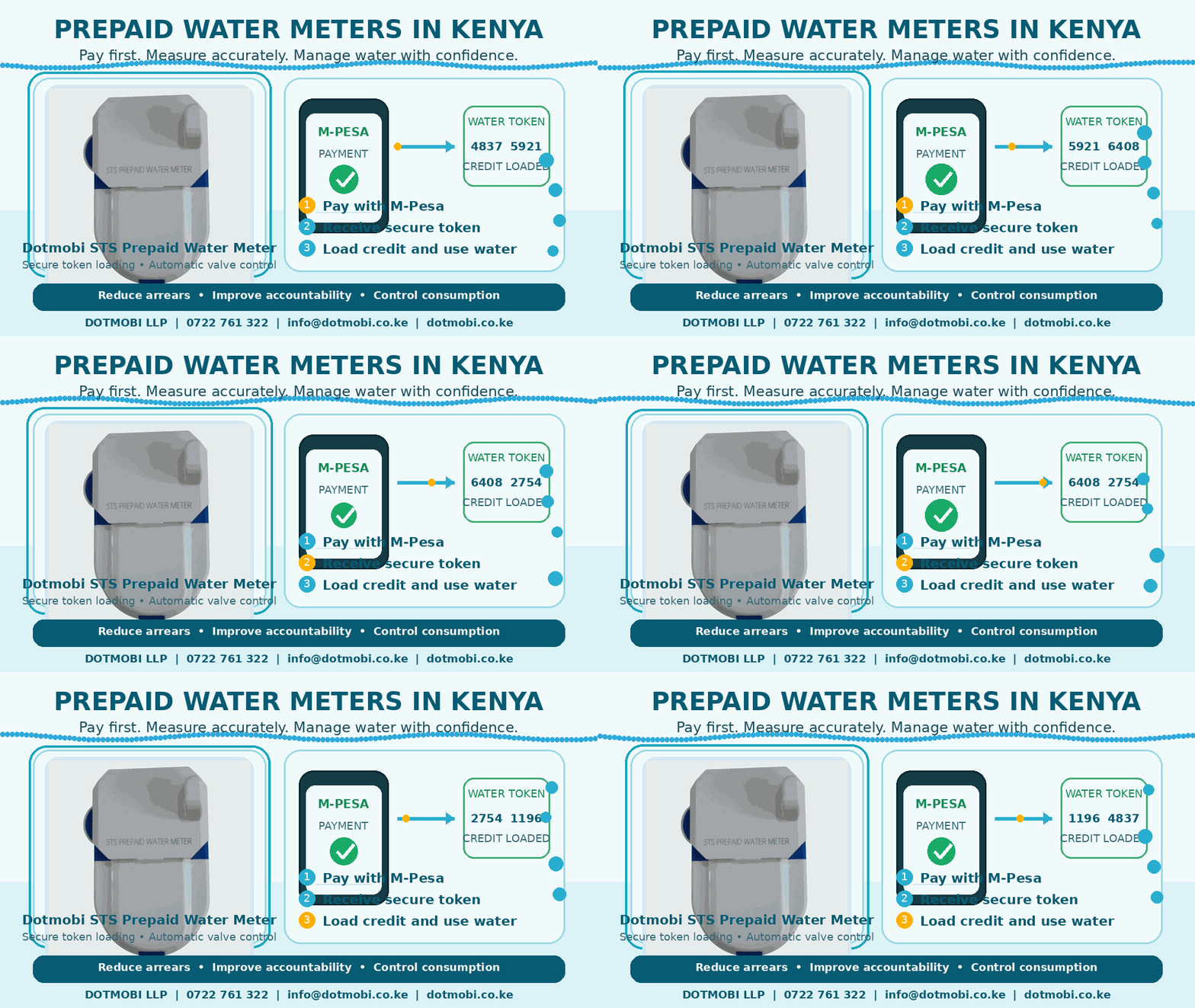
Dotmobi provides STS prepaid water meters in Kenya supported by a locally developed prepaid water-management platform.
Customers can pay for water credit using M-Pesa. Once the payment is confirmed, the system generates the appropriate prepaid token.
The customer can enter the token through the supported meter interface or Customer Interface Unit to load the purchased water credit.
This combination provides a practical water-management process:
Pay through M-Pesa.
Receive a token.
Load the credit.
Use the water.
Top up when necessary.
For landlords, institutions and water suppliers, the platform reduces dependence on manual collections and handwritten token records.
For consumers, it provides a familiar and convenient way to purchase water credit.
What Changed at the Car Wash?
Under the new prepaid arrangement, the car wash no longer received water first and searched for payment later.
The manager purchased water credit before beginning operations.
Every top-up represented confirmed payment. Every litre consumed reduced the available balance.
This immediately changed how the business operated.
Water Became a Measurable Operating Cost
The owner could compare the amount spent on water with the number of vehicles washed.
If the water credit was reducing unusually quickly, management could investigate the cause.
Workers became more careful about leaving hoses running. Free or unrecorded water could no longer disappear unnoticed into the monthly bill.
Water Money Was No Longer Used for Other Expenses
Previously, all daily collections were mixed together. Money intended for water could be used for wages, detergents, fuel or small repairs.
With prepaid metering, water had to be paid for before it was consumed.
The cost could no longer be postponed until the end of the month.
The Water Supplier Reduced Collection Risk
The water supplier no longer had to chase the car-wash owner for an outstanding account.
Water credit was purchased in advance, helping the supplier improve cash flow and maintain a clearer relationship between revenue collected and water delivered.
Management Could Price Services More Accurately
Once the owner understood the actual water cost involved in washing vehicles, the business could review its prices more intelligently.
Services could be priced with a better understanding of water consumption rather than relying entirely on assumptions.
The car wash remained busy, but it was now operating with greater control.
Benefits of Prepaid Water Meters in Kenya
1. Reduced Water Arrears
Users purchase credit before consuming water.
This helps landlords, borehole operators, institutions and private water suppliers reduce unpaid accounts.
2. Improved Revenue Collection
A prepaid system connects confirmed payment to water credit.
The water provider does not have to finance consumption while waiting for customers to settle monthly bills.
3. Reduced Billing Disputes
Each user can pay according to their own consumption.
This is especially useful in apartments, gated communities, hostels and commercial buildings where users may otherwise share unclear or estimated bills.
4. Better Consumption Control
When users can relate water consumption to their remaining credit, they are more likely to notice unnecessary usage.
A running tap, leaking fitting or excessive use reduces the available balance and can prompt quicker corrective action.
5. Convenient M-Pesa Payments
Dotmobi’s supported platform enables users to purchase water credit using M-Pesa and receive the relevant prepaid token after payment confirmation.
This makes prepaid water metering more convenient for Kenyan consumers.
6. Reduced Cash-Handling Risk
Digital payments can reduce the amount of physical cash handled by caretakers, attendants and water-project officials.
They also create a clearer transaction record between payment and credit issued.
7. Better Management of Multiple Users
Property owners and water providers managing several meters can implement a more structured system in which individual users purchase their own credit.
This reduces dependence on shared bills and manual allocation.
Why STS Compliance Matters
STS means Standard Transfer Specification.
STS-compliant prepaid meters support secure token-based transfer of prepaid utility credit.
For water-meter users, this provides a structured method of generating and loading credit into the relevant meter.
A Dotmobi STS prepaid water-meter solution can include:
- Secure prepaid token loading
- Accurate measurement of water consumption
- Customer Interface Unit support
- Automatic valve control
- M-Pesa-enabled token purchasing
- Meter configuration and management support
- Installation and commissioning guidance
The result is more than a standalone meter. It is a complete approach to measuring, paying for and controlling water consumption.
Where Prepaid Water Meters Can Be Installed
Prepaid water meters in Kenya can support many different applications, including:
- Apartments and rental houses
- Gated communities
- Commercial buildings
- Car washes
- Shopping centres and market stalls
- Borehole water projects
- Community water schemes
- Schools and colleges
- Hostels and staff quarters
- Hospitals and health facilities
- Factories
- Farms and irrigation projects
- Churches and institutions
- Water-vending points
- Private water suppliers
Any property or project supplying water to several users may benefit from connecting consumption more closely to payment.
Prepaid Water Meters for Landlords
Landlords frequently pay a main water bill before recovering the money from tenants.
When some tenants delay payment, the landlord effectively finances their water consumption. Caretakers may then spend days following up arrears and resolving disputes over readings.
Individual prepaid water meters can help tenants purchase and manage their own water credit.
This can help landlords:
- Separate water charges from rent
- Reduce unpaid water bills
- Improve fairness among tenants
- Reduce shared-bill disputes
- Improve property cash flow
- Reduce the caretaker’s collection workload
- Encourage responsible water consumption
Instead of asking who has paid at the end of the month, management can concentrate on maintaining the property and providing reliable services.
Prepaid Water Meters for Boreholes and Community Projects
A water project may have plenty of customers while still struggling financially.
High consumption does not automatically mean that enough money is being collected for electricity, treatment, pump maintenance and repairs.
A prepaid water system helps the project collect revenue before supplying water.
This can create a stronger foundation for meeting expenses such as:
- Pump servicing
- Electricity
- Water treatment
- Pipe repairs
- Replacement of valves and fittings
- Maintenance of tanks and distribution lines
- Emergency breakdowns
- Future expansion
Good technology does not replace responsible management. It gives management a stronger payment and measurement system.
Choosing the Right Prepaid Water-Meter Solution
Before installation, the property owner or water-project manager should consider:
- The number of users or connections
- Existing pipe sizes
- Expected consumption levels
- Meter installation locations
- Accessibility of the Customer Interface Units
- Payment and token-vending requirements
- The source of the water
- Future expansion plans
- Installation and commissioning support
- Maintenance and after-sales requirements
Dotmobi can assess the intended application and recommend an appropriate configuration for rental properties, commercial premises, boreholes, institutions and community water projects.
Frequently Asked Questions
Can prepaid water credit be purchased through M-Pesa?
Yes. Dotmobi’s supported prepaid water-management platform allows customers to pay through M-Pesa. After payment confirmation, the appropriate prepaid token is generated.
What happens when the credit is exhausted?
When the available credit is finished, the meter’s internal valve controls the water supply. The customer purchases and loads additional credit to continue using water.
Can landlords install separate meters for individual tenants?
Yes. Separate prepaid meters can help each tenant purchase and pay for their own water consumption.
Are prepaid water meters suitable for boreholes?
Yes. They can be used by borehole operators, private water suppliers and community water projects to connect consumption to advance payment.
Can a prepaid meter create water when the main supply is unavailable?
No. A prepaid meter measures and controls available water. It does not replace the water source, storage tank, pump or distribution infrastructure.
Can prepaid water meters encourage water conservation?
They can encourage more responsible consumption because users can relate their water use to their remaining credit and expenditure.
Stop Consuming First and Collecting Later
The car wash in our story was not failing because it lacked customers.
It was struggling because water consumption and payment were moving in different directions.
The business used water today and worried about paying for it later.
Prepaid water metering changed that arrangement.
Every top-up represented confirmed payment. Every litre consumed reduced the available credit. Management could understand water as a measurable cost rather than an unexpected monthly bill.
For landlords, businesses, institutions and water projects, the lesson is simple:
Do not wait until the bill becomes a dispute, a disconnection or a financial crisis.
Move from uncertain collections to an organised pay-before-use system with Dotmobi prepaid water meters in Kenya.
Request a Prepaid Water-Meter Quotation
Contact Dotmobi LLP for prepaid water-meter enquiries, installation guidance and quotations.
Call: +254 722 761 322
Email: info@dotmobi.co.ke
Website: www.dotmobi.co.ke
Learn more about the Dotmobi STS Prepaid Water Meter and Dotmobi’s smart metering and IoT solutions.