Consider a familiar factory scenario.
A truck arrives in the morning carrying raw materials. It is weighed at the entrance, and the operator records the weight in a notebook. The stores clerk enters another figure into a spreadsheet. Production later records the quantity received using its own system, while accounts relies on the supplier’s delivery note when preparing payment.
At the end of the day, every department has a record.
Unfortunately, the records do not agree.
The weighing operator says the factory received 18,420 kilograms.
The stores spreadsheet shows 18,240 kilograms.
Production reports that only 18,050 kilograms reached the processing line.
The supplier’s delivery note claims that 18,600 kilograms were delivered.
Nobody can immediately explain the difference.
The scale may have been accurate. The employees may have followed their normal procedures. The supplier may genuinely believe the delivery note is correct.
The real problem is that the weighing operation is disconnected from the rest of the business.
This is why modern factories, agricultural cooperatives, warehouses and processing plants need more than a standalone weighing scale. They need a custom weighing system that connects weighing hardware, software, operators, transaction records and management reporting.
A Weighing Scale Should Not Work Alone
A weighing scale performs an important function: it measures weight.
However, modern businesses need much more than a number appearing on a display.
Management needs to know:
- What was weighed?
- Who conducted the transaction?
- Which scale was used?
- When did the weighing take place?
- Which supplier, farmer, truck or customer was involved?
- Was the scale operating from its authorised location?
- Was the calibration function accessed?
- Did the recorded weight reach the central system without being changed?
- Did stores, production and accounts receive the same information?
A standalone scale cannot answer all these questions by itself.
A Dotmobi Custom Weighing System brings together the weighing equipment and the business processes surrounding it. Instead of leaving departments to create separate versions of the same transaction, the system creates a more controlled flow of information from the weighing point to the central database.
What Is a Custom Weighing System?
A custom weighing system is an integrated combination of weighing hardware, specialised software, secure data capture and business reporting designed around an organisation’s actual workflow.
It may include:
- Industrial platform, bench, hanging or vehicle weighing scales
- Digital weight indicators
- Operator identification
- Supplier or farmer records
- Product and material selection
- Automatic weight capture
- Transaction timestamps
- Receipt or ticket printing
- Inventory updates
- Management dashboards
- Cloud-based monitoring
- Tampering alerts
- GPS location monitoring
- Mobile data collection
- Integration with accounting, ERP or production systems
Unlike a generic off-the-shelf system, a customised solution is built around how the organisation receives, weighs, processes, stores, pays for and dispatches goods.
That distinction is important.
The technology should fit the operation. The operation should not be forced to struggle with technology that was designed for an entirely different business.
The Missing 370 Kilograms
Back at the factory, management begins investigating the difference between the four records.
The weighing operator explains that he wrote the correct figure in the notebook.
The stores clerk admits that she may have typed two digits in the wrong order.
Production says some material was rejected because of contamination, but the rejected quantity was not formally recorded.
Accounts used the supplier’s delivery note because the weighing notebook had not yet reached the office.
The missing 370 kilograms were not necessarily stolen.
They disappeared inside a weak process.
This is how many businesses lose money. The loss does not always begin with one dramatic act of fraud. It may begin with delayed paperwork, repeated data entry, incorrect typing, unclear rejection records, unauthorised adjustments or departments working from different information.
A customised weighing system can significantly reduce these weaknesses by capturing information once and making the same transaction available to authorised users throughout the organisation.
One Transaction, One Trusted Record
When weighing data is captured directly from the scale, the operator does not have to read the display and type the figure manually into several systems.
The weight can be linked automatically to information such as:
- Vehicle registration number
- Supplier or farmer name
- Product delivered
- Delivery reference
- Operator identity
- Date and time
- Scale identity
- Gross weight
- Tare weight
- Net weight
- Quality or grade information
- Approved deductions
- Final accepted quantity
The transaction can then support stores receiving, production planning, supplier payment, inventory reconciliation and management reporting.
Everyone works from the same record.
This does not only save time. It strengthens accountability.
Protecting the Source of the Data
Connecting a scale to software is valuable, but the captured data must also be trustworthy.
If an unauthorised person can alter the scale’s calibration, substitute the authorised scale, manipulate a weight reading or interfere with the scale enclosure, the software may simply store an inaccurate figure more efficiently.
That is why secure weighing should begin at the point of measurement.
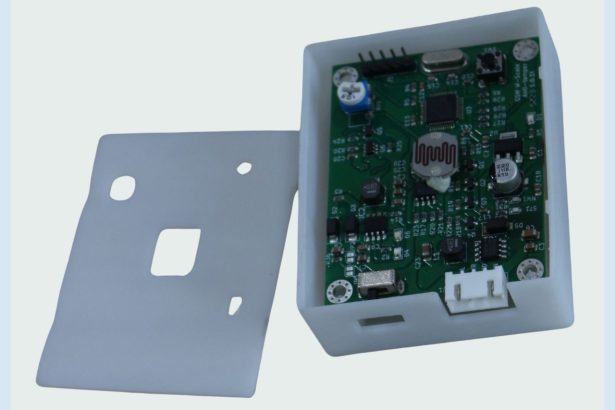
The Dotmobi Weighing Scale Tampering Guard adds an intelligent protection layer to commercial weighing operations. It is designed to help detect suspicious interference and support real-time alerts when unauthorised activity occurs.
The solution can form part of a wider custom weighing environment where management needs to protect:
- Scale calibration
- Physical scale access
- Authorised scale identity
- Scale location
- Weighing transactions
- Operator accountability
- Communication between the scale and data-capture device
A secure system should not merely record what the operator enters.
It should help management establish whether the information came from the correct scale, through the authorised process and without unauthorised interference.
Connecting Field Operations to the Main Office
Not every weighing transaction happens inside a factory.
Agricultural produce may be collected at rural buying centres. Livestock, scrap metal, construction materials or merchandise may be weighed at temporary locations. Field officers may also need to capture inspections, deliveries, customer details or stock information away from the office.
Paper forms create delays in such environments.
They may be lost, damaged, altered or delivered late. Information may also have to be typed again at the main office, creating another opportunity for errors.
The SWELL V760 Personal Digital Assistant can support mobile data collection as part of a customised operational system. Field personnel can capture transaction information using a rugged handheld device and transmit it to the central platform.
A portable printer can also be integrated where the customer, farmer, driver or supplier needs immediate proof of the transaction. The SPRT 80MM Portable Printer helps organisations issue receipts, tickets or transaction records at the point of service.
This creates a clearer process:
Capture. Verify. Print. Synchronise. Report.
Better Inventory Control Begins at Receiving
Inventory problems often begin before goods reach the warehouse.
A delivery may be weighed but not immediately entered into stock. Stores may record a different quantity from the weighing point. Production may consume material before the system is updated. Rejected or damaged goods may not be separated clearly from the accepted quantity.
By the time management attempts to reconcile stock, the original transaction has passed through several hands.
A custom weighing system can connect receiving weight directly to inventory records. Depending on the organisation’s requirements, it can help:
- Update raw material quantities
- Separate accepted and rejected goods
- Record product grades
- Link deliveries to suppliers
- Compare expected and actual quantities
- Monitor production input and output
- Identify unexplained weight differences
- Generate daily, weekly or monthly reports
This gives management earlier visibility.
Instead of discovering a stock difference during the month-end count, the business can investigate the transaction closer to the time it occurred.
Supporting Fair Payments to Farmers and Suppliers
In agriculture and other weight-based businesses, the captured weight may determine how much a farmer, supplier, transporter or customer is paid.
An inaccurate record therefore affects more than inventory.
It affects livelihoods, business relationships and trust.
A cooperative may need to associate each delivery with a member number. A produce buyer may need to record grade, moisture content or approved deductions. A factory may need to connect received quantities to supplier invoices. A transporter may require a printed ticket showing the gross, tare and net weight.
A customised system can be configured around these requirements.
When the process is transparent, disputes can be handled using records rather than memory.
The supplier can receive proof of the transaction. The organisation can maintain an audit trail. Management can trace the operator, device, scale, time and location associated with the record.
Fair trade requires more than an accurate scale.
It requires a trustworthy process surrounding the scale.
Custom Weighing Systems for Different Industries
Dotmobi custom weighing systems can be developed for organisations operating in areas such as:
- Agricultural produce collection
- Tea and coffee processing
- Grain and cereal trading
- Manufacturing
- Warehousing
- Logistics and transport
- Construction materials
- Livestock and animal-feed production
- Scrap-metal collection
- Mining and quarry operations
- Waste management
- Retail and wholesale distribution
- Cooperatives and farmer organisations
- Industrial receiving and dispatch
Each environment has different requirements.
A cooperative may prioritise farmer identification and payment records.
A factory may prioritise production integration and inventory control.
A warehouse may need batch, product and customer tracking.
A logistics yard may require vehicle identification and weighbridge automation.
Dotmobi studies the workflow and develops a solution that responds to the actual operational problem.
From Separate Devices to One Operational System
A business may already have scales, computers, printers and mobile devices.
However, owning several devices does not automatically create an integrated system.
The real value comes when the devices work together.
Through the Dotmobi Cloud-Based IoT Platform, geographically distributed devices and operational points can be connected to a central monitoring environment.
Management can gain better visibility across different branches, factories, collection centres or weighing locations. Alerts, reports and transaction records can reach authorised personnel without waiting for paper documents to travel physically.
Dotmobi also provides Data Integrity Solutions that focus on protecting information from the point of capture, through transmission, to final storage.
This creates a stronger chain of trust:
- The correct equipment captures the measurement.
- The authorised operator is identified.
- Relevant transaction information is recorded.
- The data is transmitted securely.
- The central system stores the record.
- Authorised departments access the same information.
- Reports and audit trails support management decisions.
The Factory Finally Finds One Version of the Truth
After introducing an integrated weighing process, the factory in our story changes how deliveries are handled.
The truck is identified before weighing.
The supplier and product details are selected from the system.
The weight is captured directly from the authorised scale.
Any rejected quantity is recorded against the same transaction.
Stores receives the accepted quantity automatically.
Accounts uses the verified record when processing the supplier’s documents.
Management can review the transaction without searching through notebooks, spreadsheets and delivery notes.
The departments no longer argue about which figure is correct.
They all work from one trusted record.
That is the difference between owning a scale and operating a complete weighing system.
Build a Weighing System Around Your Business
Your business should not depend on disconnected scales, handwritten records, repeated data entry and delayed reconciliation.
Dotmobi LLP develops custom weighing systems that bring together hardware, software, mobile devices, monitoring, printing, reporting and data-integrity controls.
Whether you are managing a factory, cooperative, warehouse, agricultural buying operation or industrial facility, Dotmobi can assess your workflow and recommend an appropriate solution.
Explore Dotmobi Custom Weighing Systems or review our full range of smart products and solutions.
For a consultation, technical discussion or quotation, contact Dotmobi.
Call: +254 722 761 322
Email: info@dotmobi.co.ke
Do not allow every department to maintain a different version of the same transaction.
Create one secure weighing process—and one trusted version of the truth.